- 1
Verify the chain
Each posted entry carries a hash chained to its predecessor. Verification walks the chain and reports whether it is intact, where the first break is, and when it was last checked.
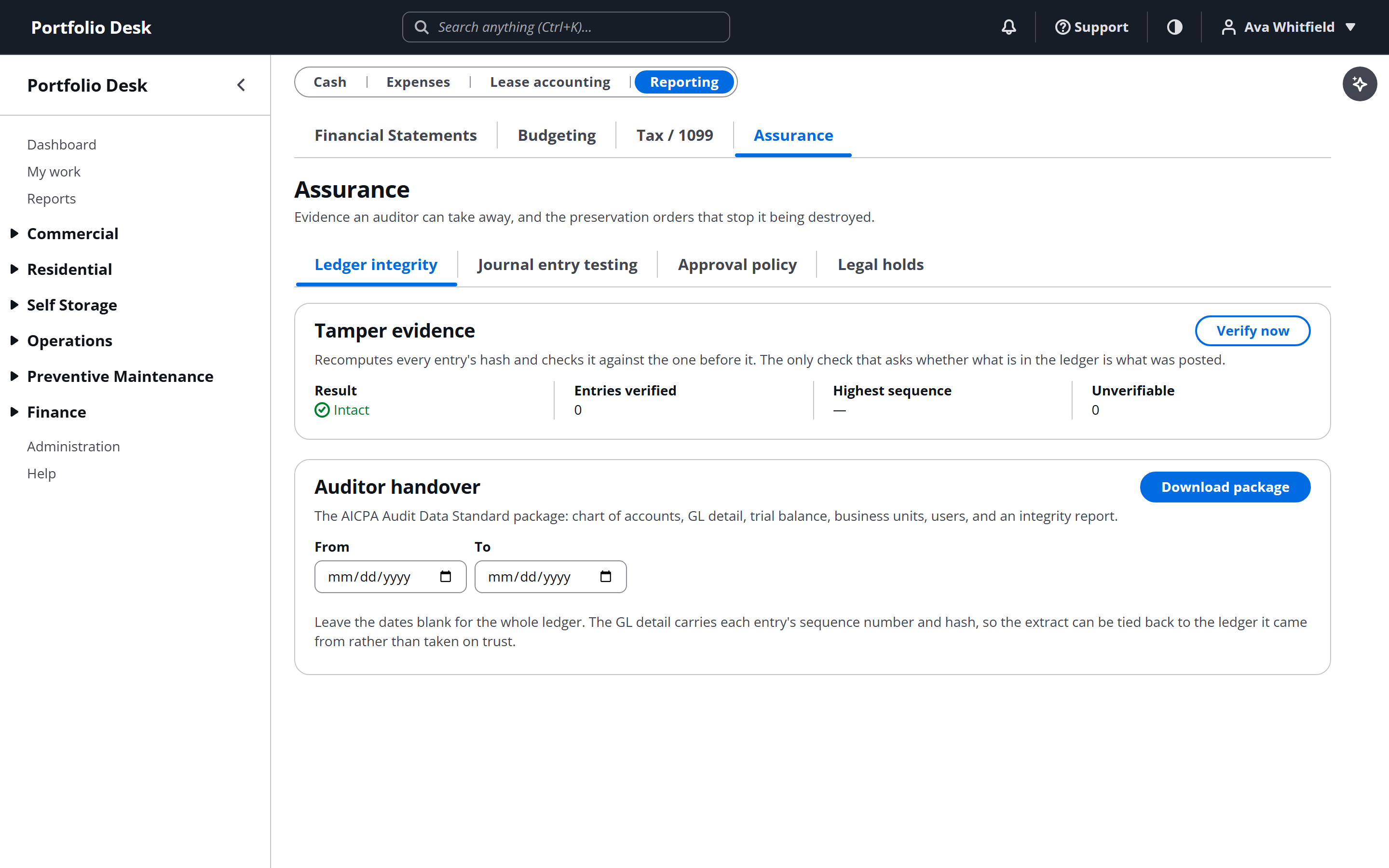
A real screen from the running product, captured against a demo portfolio. - 2
Run journal-entry tests
The procedures an auditor performs anyway: postings outside working hours, suspiciously round amounts, entries just under an approval threshold, accounts that woke up after a long silence, and Benford’s law on leading digits.
- 3
Export the evidence
A standard data export plus the attestation pack, so an auditor can work without a database extract and a phone call.
Verification runs nightly and every run is retained, so the record shows the chain was checked continuously rather than the once you opened the page. A selection is not a finding — a round number is usually just a round number — and the output says so, because a tool that reports suspicion as fact teaches you to ignore it.
Used alongside
No card required. Every feature in this guide is available to try.
Get started